





Boerboels earn their reputation as one of the most powerful and family-focused guard dogs available, but understanding their growth timeline helps owners prepare for the commitment. Physical maturity affects their space needs, diet, joint health, and ability to protect confidently without overexertion.
Most owners discover that managing growth periods effectively creates a better bond between them and their dog. You can avoid common mistakes by learning what size ranges to expect and how fast Boerboels typically reach their full adult form.
Growth Stages From Puppy to Adult
Most Boerboel puppies appear large early, but the initial weight does not reflect their final frame or strength. Growth accelerates rapidly between months three and eight, often doubling their weight and transforming their overall silhouette. During this phase, their bones lengthen, muscles begin forming definition, and posture slowly stabilizes into the adult stance.
Between eight and fourteen months, Boerboels experience uneven surges in mass, requiring careful food measurement and regular exercise to prevent early joint stress. Owners may notice shorter bursts of energy paired with longer naps as the nervous system catches up to the physical build. Stronger appetite and erratic sleeping behavior often signal the final major growth stage before adult proportions lock in.
Boerboels often finish growing in height by eighteen months but keep adding weight and muscle until about two and a half years. Their heads become broader, chest volume expands, and movement shifts into a more deliberate, confident stride. When Boerboels are fully grown and how big they get depends on genetics, diet, and exercise routines maintained from youth onward.
Weight and Height Averages for Adult Boerboels
A full-grown male Boerboel typically weighs between 140 and 180 pounds, with some reaching 200 pounds under ideal conditions. Females usually fall between 110 and 145 pounds, though their structure often appears just as powerful due to frame distribution. Height averages range from 24 to 27 inches at the shoulder, depending on bloodline and nutrition.
Larger Boerboels may hit those numbers earlier, but rapid early gains don’t always translate to the healthiest outcome. Balanced growth supported by lean protein, measured fat, and regulated activity tends to produce more athletic, less injury-prone dogs. Joint health, especially in the rear hips, depends on avoiding excess weight while bones and ligaments remain flexible.
Differences between males and females in mass and structure become clearer around the one-year mark. At this point, most owners start adjusting food portions and daily walks to reflect adult needs rather than puppy habits. When Boerboels are fully grown and how big they get depends on structural maturity tracked through muscle tone and behavior—not just weight alone.
How Long Does Mental Maturity Take?
Boerboels mature physically faster than they develop mentally, especially when raised as both family companions and working dogs. While muscle mass and strength settle around two years old, judgment and impulse control may continue forming through age three. Early training with boundaries builds consistent behavior by reinforcing leadership without harshness.
Signs of mental maturity include increased calmness in unfamiliar environments, reduced reactivity to common sounds, and clear separation between play and real alertness. Younger Boerboels may bark impulsively, jump during excitement, or retreat from loud noises, even when their bodies seem adult-sized. A confident, emotionally mature Boerboel watches first and acts only when needed.
Owners should prioritize socialization across different ages, locations, and exposure types to support their dog’s mental development. Leash behavior, command follow-through, and respect for household routines all reflect where the dog stands mentally. A physically grown dog still lacking impulse control often just needs more structure and time—not more discipline.
Gender Differences in Growth and Size
Males generally show broader heads, denser shoulders, and heavier bones by the time they reach two years. Their size and behavior both lean toward dominance, but not aggression, when properly raised with structure and training. Females show faster social responsiveness but maintain equal drive and loyalty when given the same work and play balance.
Growth curves differ slightly as well, with females often reaching height and maturity several months before males. However, males tend to keep gaining weight and bulk after females have already plateaued. You should adjust routines differently depending on whether you own a male or female Boerboel.
Choosing between a male and female often depends on your household dynamic, training expectations, and previous large dog experience. Both make excellent protectors and companions when trained early and consistently. Size alone should never dictate selection, but understanding the range helps with crate size, vehicle compatibility, and home layout planning.
What Size Dog Owners Should Expect
[IMAGE B]
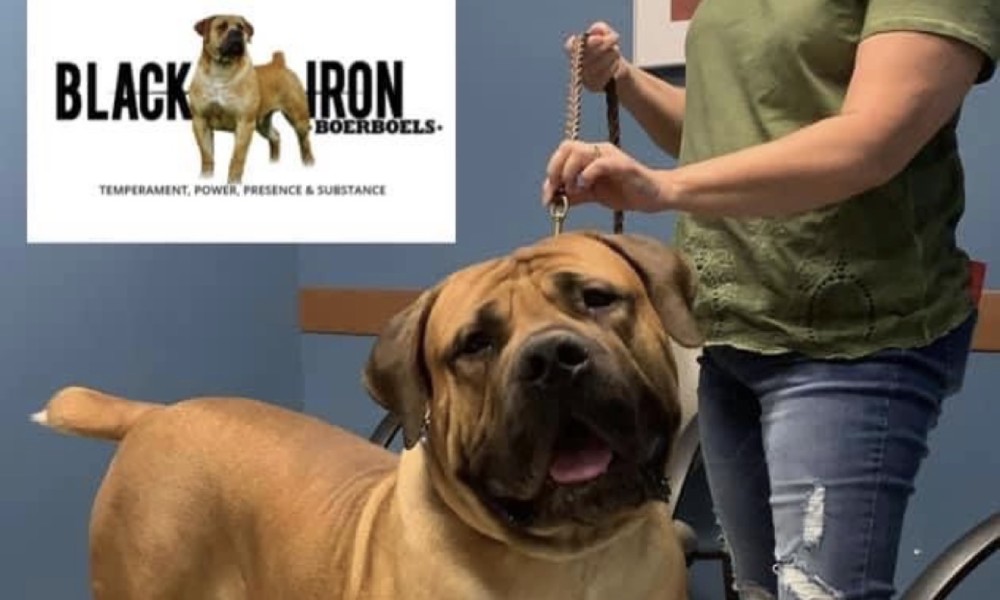
Boerboels rarely fall below 100 pounds as adults, and most owners must prepare for a presence that fills a hallway, the backseat of a car, or the kitchen floor. Walking strength, bed space, food volume, and crate dimensions all require investment and planning. Few breeds combine indoor gentleness with outdoor readiness like a Boerboel.
If you need a dog that stays compact or avoids shedding, the Boerboel likely won’t align with your needs. Instead, expect a heavy, muscular, short-coated dog that thrives in wide spaces and performs best when given structure and purpose. Their presence impresses strangers and reassures family members alike.
At Black Iron Boerboels, you’ll find South African Boerboel puppies for sale for buyers serious about raising a reliable companion and natural guardian. Our dogs grow into confident protectors because they receive care, time, and attention from the moment we match them with a future home. We support owners throughout the growth journey with experience, advice, and pride in every pairing.
Factors That Influence Final Size
Diet and food quality during the first eighteen months have the biggest impact on muscle density, joint strength, and body composition. Protein-rich meals balanced with moderate fat and trace minerals promote healthier tissue recovery after exercise or play. Overfeeding with calorie-dense kibble, however, can cause joint strain and sluggish behavior.
Genetics also plays a central role. Puppies from larger-framed lineages tend to produce similarly proportioned adults, especially when both parents share solid bone structure and a balanced posture. Ask about both parents’ growth history when possible to avoid surprise weight or health issues later.
Exercise patterns, stress levels, and injury history affect long-term mass and muscle distribution. Climbing stairs too young, frequent jumping on hard surfaces, or inconsistent outdoor time may slow ideal growth rates. Matching activity to age protects their development while still building the mental and physical traits Boerboels need to guard confidently.
Size alone doesn’t define what makes a Boerboel special, but it shapes how owners approach care, space, and daily routines. Raising one of these dogs from puppyhood to full maturity creates a rare bond grounded in trust and presence. For those ready to take on the challenge, Black Iron Boerboels pairs each family with the right South African Boerboel puppy for long-term success and loyalty.