





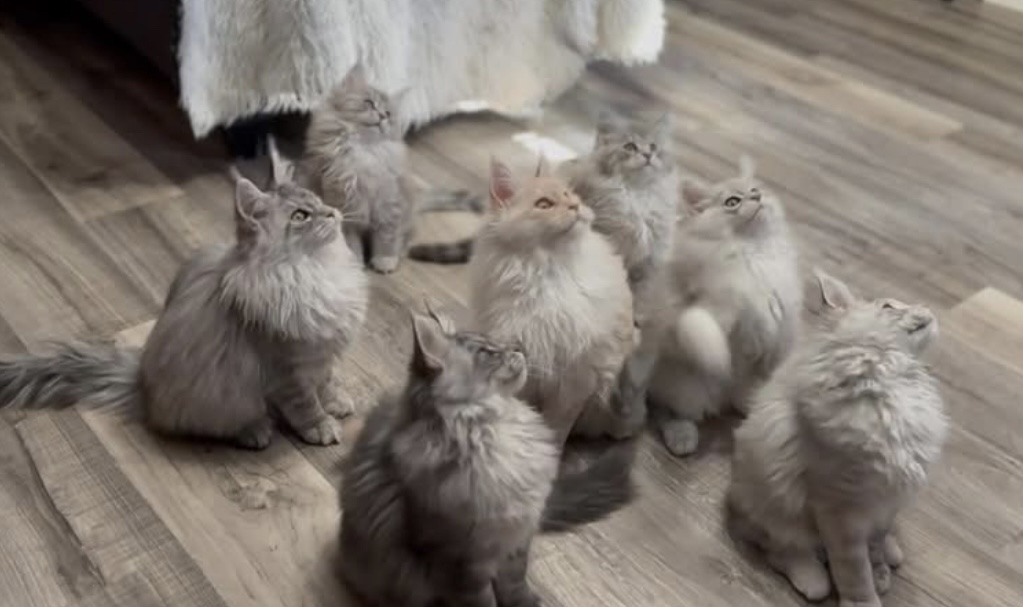
If you’re considering bringing a Maine Coon kitten into your home, you want to ensure your new feline companion is healthy, happy, and raised responsibly. This guide breaks down the key factors you should evaluate. Whether you’re a first-time buyer or a long-time Maine Coon admirer, here’s what to look for when buying a Maine Coon kitten.
What is a Maine Coon?
The Maine Coon is a large, friendly, and intelligent breed loved for its distinctive looks and endearing personality. Known as the “gentle giant” of the cat world, this breed features a strong, muscular build, large, tufted ears, and a flowing, bushy tail.
Their luxurious, shaggy coats come in a variety of colors and patterns, and they have a reputation for their striking, expressive eyes. Maine Coons bond deeply with their families while maintaining a playful and curious demeanor.
They make excellent companions for families of all sizes, thriving in environments where they can explore, interact, and share their loving personalities.
Kitten Health
A healthy kitten comes with veterinary records that give you insight into its care. Request documents outlining vaccinations, deworming treatments, and routine health exams. Ask the breeder about any additional treatments or preventative care measures taken, such as flea control.
Maine Coons have a predisposition to health conditions such as hypertrophic cardiomyopathy (HCM) and hip dysplasia. Responsible breeders conduct genetic testing for these issues in parent cats. Ask to see the results to ensure the kitten has a reduced risk for inherited problems.
HCM impacts heart function, while hip dysplasia affects mobility, so avoiding these conditions will improve your kitten’s long-term quality of life. If breeders dismiss your concerns about these tests, they likely lack transparency in their practices.
Physically Evaluate the Kitten
Examine the kitten during your visit to assess its physical health. Look for bright eyes free of discharge and a clean nose without visible mucus. The fur should feel soft, with no bald patches or signs of skin irritation.
Watch how the kitten walks and moves, as a normal gait indicates strong muscles and healthy joints. Avoid kittens displaying lethargy, irregular movement, or difficulty breathing. A healthy kitten will appear energetic and naturally curious about its surroundings.
Assess Living Conditions
Inspect the kitten’s living environment for cleanliness. The breeder’s area should appear well-maintained, with no signs of overcrowding or neglect. Kittens raised in unsanitary conditions may face health complications later. Ensure the space includes food, fresh water, and enrichment opportunities, such as toys and climbing surfaces.
Temperament and Socialization
Temperament lays the foundation for a good relationship with your Maine Coon, so pay close attention to the kitten’s demeanor. Interact with the kitten during your visit and note how it reacts. A friendly and curious kitten will approach you confidently or engage with toys.
Shyness isn’t uncommon in new environments, but extreme fear or aggression may point to poor socialization. Healthy interaction early on makes the kitten more adaptable to its forever home.
Furthermore, watching the kitten interact with its siblings gives insight into social development. During play, healthy kittens show mutual engagement, such as chasing and tapping each other, without being overly rough. Signs of bullying or avoidance during play may indicate underlying behavioral concerns.
Ask About the Breeder’s Socialization Practices
Discuss the breeder’s socialization practices. Responsible breeders introduce kittens to various environments, sounds, and experiences early. Exposure to household settings, such as vacuums or dishwashers, conditions them for future environments. Maine Coons are naturally sociable cats, and this training enhances their confidence and outgoing nature. A lack of hands-on socialization may leave the kitten overwhelmed when entering your home.
Consider Age and Stage of Development
Kittens 12–14 weeks spend enough time with their mother and siblings to learn essential behaviors, such as play and grooming. Interactions within the litter develop social, physical, and emotional skills. Purchasing kittens too early skips this critical development phase.
Ensure the kitten reaches this benchmark and appears independent yet still curious and playful. Age-appropriate milestones make the transition to a new home smoother for you and the kitten.
Pedigree and Registration Papers
Pedigree and registration papers are important things to look for when buying a Maine Coon kitten. Genuine records showcase the kitten’s heritage and confirm its status as a purebred Maine Coon.
Essentially, these documents trace the family tree and ensure no interbreeding with other cat breeds. A reputable breeder always keeps these records ready and updates them accurately with each new litter.
Recognize Maine Coon Traits
Maine Coons have unique characteristics that set them apart from other cats. Look for their large size, long and bushy tails, tufted ears, and big, expressive eyes. Their coats should appear silky and shaggy, with longer fur on their necks and tails. By pairing the kitten’s physical appearance with documentation, you guarantee the authenticity of your Maine Coon.
Identify Potential Red Flags
A lack of transparency about pedigree records raises questions about the breeder’s credibility. Some sellers may skip pedigree documentation to cut corners or hide mixed breeding. If the breeder dismisses your request for papers, don’t adopt a kitten from them. Purebred Maine Coon kittens should come with clear, verifiable lineage information, so don’t settle for vague answers.
Breeder Reputation
Be diligent when researching breeders. A reputable breeder maintains positive reviews and readily provides references from past buyers. Membership in organizations like The International Cat Association (TICA) or the Cat Fanciers’ Association (CFA) adds credibility to their practices.
Transparency is another hallmark of a good breeder. They’ll freely discuss their breeding methods, share the kitten’s history, and answer all your questions willingly. If possible, visit the breeder’s facility to assess the living conditions. A clean, spacious, and stimulating environment ensures the kittens grow up healthy and well-adjusted.
Value Communication and Follow-ups
Reputable breeders want to build lasting relationships with potential owners. They’ll inquire about your household, lifestyle, and preferences to match you with the right kitten. After the transaction, consistent communication indicates the breeder’s genuine care for their kittens’ futures.
A breeder who follows up or offers guidance for your new Maine Coon ensures you have support during the transition period. Building this trust ensures you receive a well-bred and happy kitten.
Looking for a healthy Maine Coon Kitten?
We proudly offer Euro-line Maine Coon kittens for sale via Stoic Maine Coons. These kittens display the sought-after Euro-line “wild” look with their large size, tufted ears, and shaggy, luxurious coats. Their playful, affectionate personality makes them a fantastic fit for families.
For those not familiar, the phrase “health testing” is in addition to regularly scheduled well check vet visits. Health testing is formal “testing” in which results have been sent to a grading organization such as OFA or PawPeds for either preliminary or final certs(based on age).
We have been asked what some of the conditions are that we test our Maine Coons for, and why.
🩻Hips – the amount of hip dysplasia in Maine Coons is astounding, and it can be quite crippling for such a giant cat. In the past, we have imported and purchased stateside some VERY expensive cats that we later discovered had HORRIBLE hips. Leason learned. 37% of the breed has some degree of hip dysplasia, and that figure we know to be very low as most people won’t spend the extra money for formal grading when the xrays they just paid a fortune for show that the cat won’t pass certification.
🧬 🩺HCM – Heart Condition that can be fatal. Cardiac conditions are prevelant in Maine Coons. Genetics testing can tell you if your cat carries any copies of the HCM gene. However, it is also noted that HCM can occur in cats which are not carriers, which is the justification for cardiac testing such as ultrasounding (aka echocardiogram) before breeding them.
-🧬 SMA – Spinal Muscular Atrophy which is found in Maine Coons
-🧬 PK Deficiency – blood disorder found in Maine Coons
-🧬 PKD (Polycystic Kidney Disease) which sadly causes kidney failure
At Stoic Maine Coons, we complete the following health testing on our big furry adult house ornaments.
☑️OFA Hips
☑️OFA Elbows
☑️OFA Cardiac
☑️OFA Patellas
We complete the following genetics testing on our cats:
☑️Optimal Selection Genetics Testing: clear of HCM, SMA, PK Deficiency, and PKD. It covers 45+ genetic health tests, plus blood type, along with traits and genetic diversity
All breeds of cats and dogs can develop things that one may be more prone to than others. As a breeder you can’t predict everything, but you can be responsible. The more you know!
Visit us at stoicmainecoons.com, or give us a call at 765-661-1269 or 574-202-6300.