






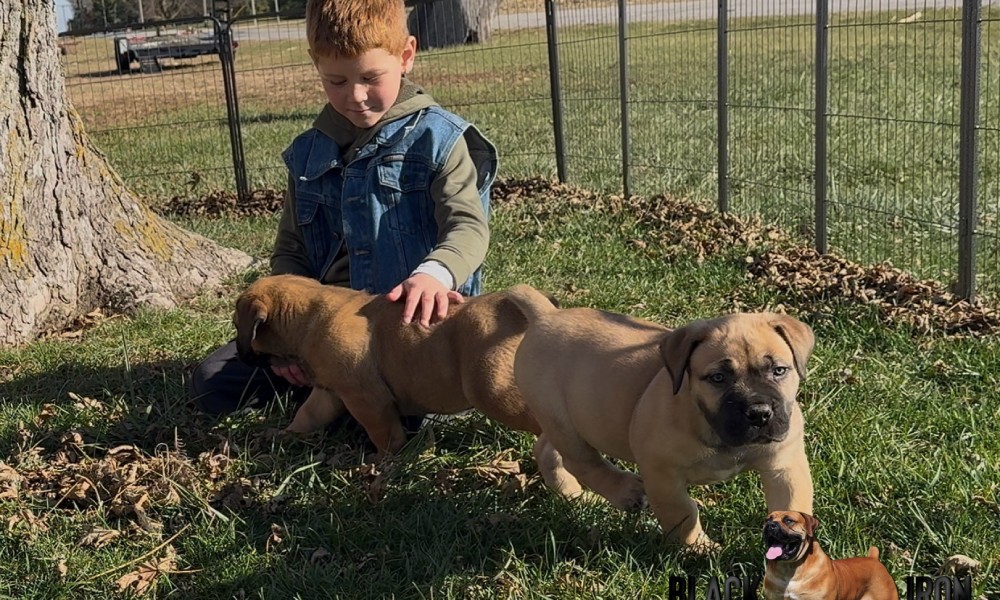
Families interested in protective dogs often gravitate toward Boerboels because of their loyalty and confidence. These muscular guardians come from a long working history, shaping both their intelligence and their alertness around new people. Many households want a dog that bonds closely with children but still deters intruders or strangers.
While Boerboels offer that balance in many homes, they also require structure, patience, and respect. Understanding their temperament and behavior before adoption makes a lasting difference in how they adjust to life around kids.
Understand the Protective Nature of Boerboels
Boerboels naturally operate as home guardians and constantly track movement, noise, and unfamiliar behavior. During birthday parties, sleepovers, or neighborhood barbecues, their protective drive may raise stress levels for guests and handlers alike. When young children yell, run, or roughhouse with each other, a Boerboel may step in to correct behavior it views as unstable or threatening.
One important thing you should know before adopting a Boerboel with kids is that protective instincts often activate during unpredictable play. Loud voices, unexpected movements, or unfamiliar smells can all trigger alert posturing or barking. Properly trained Boerboels can learn to recognize tone, intent, and facial expressions, but children must still behave with awareness.
Children often hug, wrestle, or collapse into pets without realizing that large working breeds dislike being startled. A child falling onto a resting Boerboel could easily provoke an unwanted reaction. Supervising guest interactions, setting rules for affection, and giving the dog structured rest time all support a more peaceful dynamic.
Know How Boerboels Respond To Structure
Boerboels recognize confident leadership and respond well to structure in daily life. When kids follow consistent rules about touching, feeding, or walking the dog, Boerboels interpret the environment as stable and trustworthy. Sudden changes to tone, permission, or routine create doubt, which can raise tension between the dog and the child.
You must set boundaries around furniture, entryways, and feeding locations to reinforce respectful behavior from both dog and child. Clear expectations help the dog know who leads, who follows, and what behaviors receive praise. Another important thing you should know before adopting a Boerboel with kids is that structure plays a major role in calming the dog’s reactions to household chaos.
Many handlers use feeding schedules, leash routines, and pack order walks to reinforce order. When every member of the house interacts with the Boerboel in the same way, tension drops, and trust rises. Predictable structure reduces confusion in high-energy moments, especially when children become louder or more active.
Supervise All Early Interactions Closely
Adult supervision during early bonding periods prevents small misunderstandings from becoming lifelong fears. Dogs that associate children with calm, structured interactions will respond more gently in future situations. Young children should never enter the dog’s feeding space, nudge the dog awake, or climb on its body during rest.
Parents can reinforce trust by hand-feeding the Boerboel in the presence of kids and praising calm, gentle behavior from both sides. Children must wait for a calm body posture before petting and should never throw themselves into the dog’s space. When children participate in obedience training, even just sitting nearby with treats, the dog links them with leadership and calm energy.
Supervision also teaches children to spot canine stress signals, such as yawning, rigid posture, or head turns. Dogs may become overwhelmed without warning unless parents intervene early and gently redirect attention. Teaching kids to respect those signs builds safety and empathy while helping the Boerboel feel understood.
Choose the Right Age and Maturity Level for Your Household
Boerboels often bond more smoothly with older children who demonstrate control, patience, and emotional regulation. While some younger children handle animals well, most benefit from a few more years of development before coexisting with a powerful working dog. Parents must evaluate whether their kids can handle firm rules and resist the urge to tease or invade space.
Impulse-driven behavior in children, such as chasing, yelling, or yanking toys, can confuse or frustrate a Boerboel. Reactions from the dog may seem unpredictable, but they stem from deep-rooted training instincts. Teenagers or pre-teens often succeed due to more awareness and stronger motor control.
Some families choose to adopt older Boerboels instead of starting with a puppy. Mature dogs with solid temperament testing can offer more immediate calm and predictable behavior. Others prefer to raise a puppy alongside older kids to develop bonds and create consistency across life stages.
Work With Ethical and Experienced Breeders
Choosing a Boerboel breeder goes far beyond scanning for pedigrees or asking about registration. Families need to dig into temperament records, socialization efforts, and real-world feedback from prior placements. Reliable breeders offer detailed histories, explain how their pups have adjusted to similar homes, and answer behavioral questions without hesitation.
Before moving forward, buyers should always meet the dogs in person or request a live video walkthrough that shows interaction, handling, and behavior in context. Reputable breeders speak openly about both strengths and challenges, setting realistic expectations about what a Boerboel needs to succeed in a busy household. If a breeder avoids temperament discussions or deflects questions about past litters, take it as a warning sign.
At Black Iron Boerboel, we speak directly with every client about household structure, parenting styles, and expectations before recommending a pup. With us, you can find the perfect Boerboel puppies to start a family connection based on stability, maturity, and long-term compatibility. Every conversation centers on setting the dog and family up for mutual success from day one.
Plan for Ongoing Training and Socialization
Structured training builds stability for both child and dog over the long term. Boerboels gain confidence through advanced obedience sessions, exposure to new people, and calm leadership from every family member. Large guardian breeds need more yard time, leash walks, and focused mental stimulation for role clarity.
Some families join guardian-specific dog clubs or training groups to connect with experienced handlers. These programs often emphasize body language reading, situational awareness, and confident leash handling. Sessions teach both adults and older children how to reinforce leadership without harshness or overcorrection.
Every environment outside the home—parks, stores, trails—teaches a Boerboel what the world looks like. Daily reinforcement of rules and expectations builds a calm foundation for any unexpected encounter. Socialized dogs with clear expectations adapt more easily to changing family schedules and new stages of childhood.
Strong families raise strong Boerboels, but success always depends on honesty, structure, and mutual respect. Children learn responsibility and safety, while dogs gain trust and purpose within the household.
At Black Iron Boerboel, we provide powerful pups to families ready for commitment and clarity. We support serious homes with the right tools, structure, and temperament guidance. Contact us to start your journey with a Boerboel that fits your family’s rhythm and energy.